Obsession (2026)

The year’s belle of the ball is Curry Barker’s Obsession. Many have been flabbergasted that an indie YouTube director managed to pull off the year’s greatest success story, but to anyone tracking his work over the years, it is easily earned. The Chair, Warnings, Heavy Eyes, Milk & Serial: these are exceptionally well told, highly creepy, and effective in instilling dread and horror on minuscule budget and length. The common refrain has been: once this team gets a budget for a full feature, they are going to deliver something exceptional. 

And here it is. 

It is an unoriginal tale, yet executed with original flair and sensibilities. A modern-day parable covering relationships, desire, consent and consequences. It is the oldest story: be careful what you wish for, but also… how one responds upon realizing they have committed something heinous. There is a monster in this piece, and likely many will initially sympathize with its actions, until those actions become unforgivable. Where that line is drawn is a moral challenge to the viewers. It is possible this film will be used in the future on a dating profile questionnaire in order to weed out red flags. 

There is no discussing this film without complimenting the absolute tour-de-force performance from Inde Navarrette. She drifts from extreme to extreme, delivering the year’s most unhinged performance. She shifts on a dime from casual to terrifying, her intensity and delivery unparalleled by even the most seasoned of scream queens. Scenes where practical effects are used to subtly augment her inhuman experience are unsettling on masterful levels. It weaponizes the uncanny valley using a living actress expressing horror from the depths of her soul. It is worth the price of admission alone, a standout in a film that delivers on every front. 

This film is cruel and unforgiving. It is mean and uncompromising towards characters unconsenting and undeserving, providing a worst-case scenario of a familiar notion. There are moments that will shock, moments that will disgust, moments that will make one cringe and squirm, moments that will make one question one’s assumptions. And moments that will make you laugh. 

What makes Barker’s work consistently fantastic is the amount of humor wielded organically. His dialogue combined with charismatic performances feels authentic and comes with an easy naturalistic quality. There are countless moments of originality and hilarity and when the humor suddenly shifts into bleakness, not a beat is missed. 

On a budget that would serve as most productions’ catering, Barker has demonstrated that quality execution and nuanced writing will always shame Hollywood excess. It mocks the glut of CG ghosts and gibbering ghouls, and delivers a psychologically and philosophically disturbing examination of modern-day relationship dynamics. It doesn’t need to adorn itself with flashy ornamentation or effects to wow and awe. It does this through the sheer quality of the production, augmented by the year’s best performance. Barker has earned this year’s crown without ambiguity, and within days of Halloween this year, dropped another short worth viewer attention. He has a proven track record of delivering consistent quality, and all should be anticipating what horror gems he has to deliver next. 
A

Never After Dark (2026)

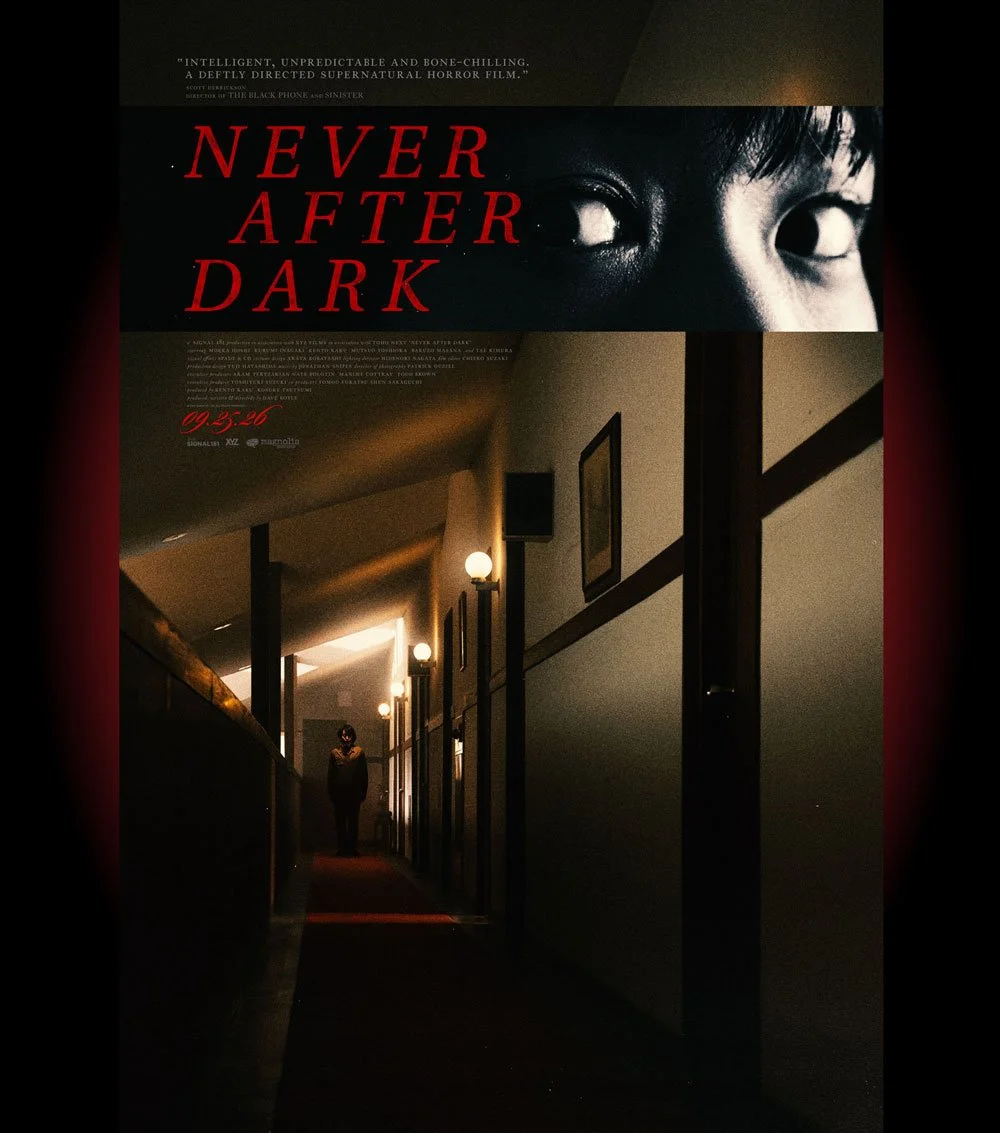
There are astronomical gulfs separating this film from others of its type. The main character is a working medium convincing spirits to leave disturbed locations. She’s not some elevated guru; she’s a gig worker with a marketable skill. It’s a pretty niche career path with no benefits. And she doesn’t work at night. Because that’s when the veil thins. It’s a grind.

She’s pretty good at what she does, though, and one of the best scenes in the film is a demonstration of ritual mechanics. She has a number of toys to help her cross the veil, and you’re not simply shown how they work; you’re drawn into the mechanism of trance, disembodiment, and altered perception. The ghosts are appropriately creepy and menacing, but it’s not really them you need to worry about. “Ghosts aren’t scary,” she proclaims. “The living scare me more.” 

There’s a dark sense of humor about things; I had a favorite moment where she drunkenly dismisses a menacing apparition as she’s “off the clock.” Moeka Hoshi is fantastic in this role, and the script gives her a lot to work with.

It is a slow burn, a decent mystery, but then things twist, and… While the reveals are telegraphed and explained in advance, they land and upend the tradition of nearly every ghost story. To say more would be spoiler, and this movie is better unspoiled. 

A-

Biohazard (2026)

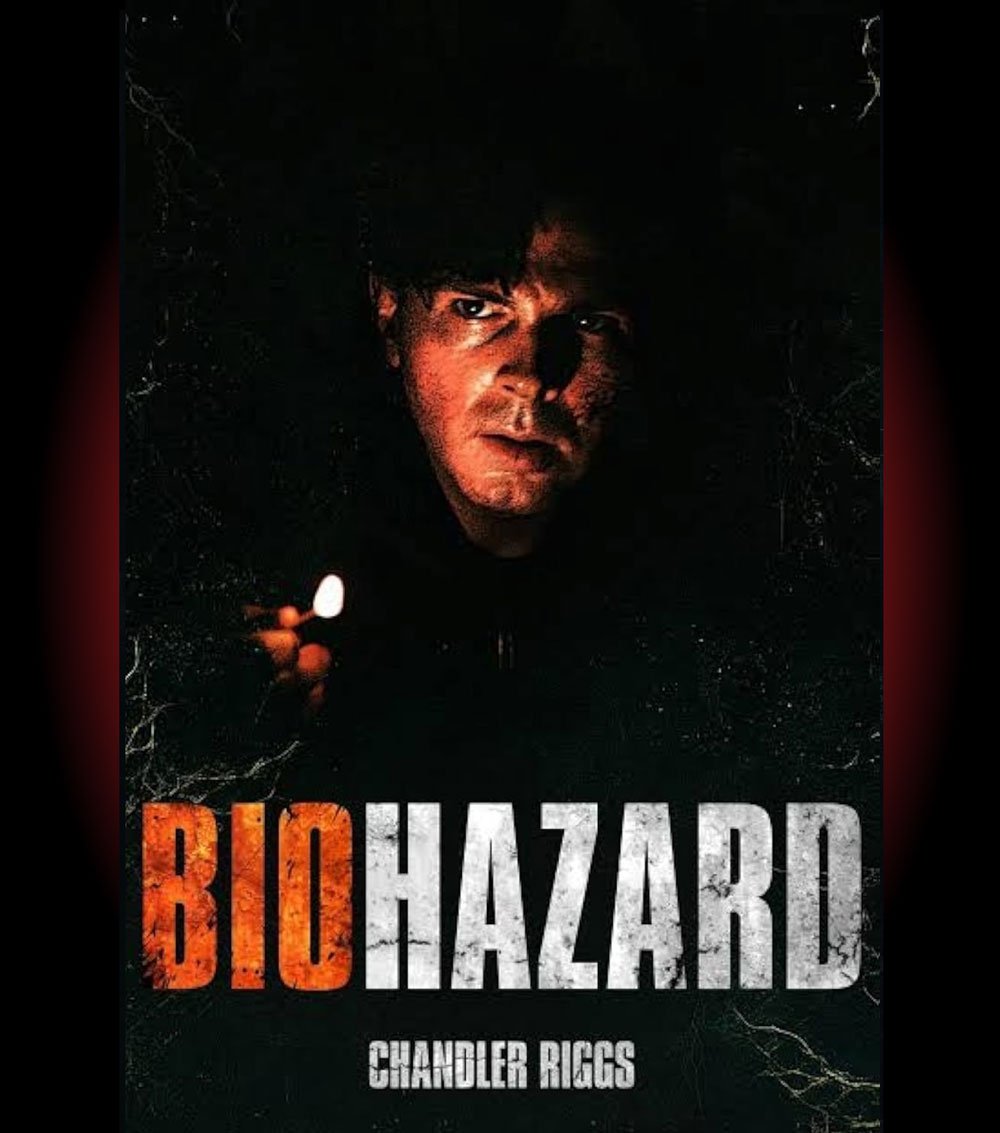
After being unkind to Chandler Riggs for many years (to be fair he earned it for TWD and Mercy), he goes and writes, directs, edits and stars in a fan-film adaptation of Resident Evil 7: Biohazard that nails it. 

It is a pitch-perfect adaptation with the highest fidelity to the letter. Every line and moment is either directly from the game, or close enough to satisfy purists. RE7 takes place from a first-person perspective, so this is where the filmmaking deviates, but it works better for a film. It handles the opening chapter from the game, up to the first major confrontation, so it doesn’t spoil much from the game, and it serves as a proof of concept for how well a game-accurate adaptation could work in the right hands. 

This is a year in which Resident Evil fans are feasting. The ninth entry, Requiem, is wildly successful and we finally get \ film representation equal to the games: Zach Cregger’s Resident Evil being true to the experience of playing games, and this is a faithful recreation of each moment from a franchise high. 

All work exceptionally well, demonstrating the vast scope within the RE franchise. As a die-hard fan each version satisfies in a distinct manner and I am legitimately torn about which direction serves better. But I am thrilled after so many poor attempts, 2026 has finally delivered on the Resident Evil film experience. So, as the meme goes, Why not Both? 

A

Do Not Enter (2026)

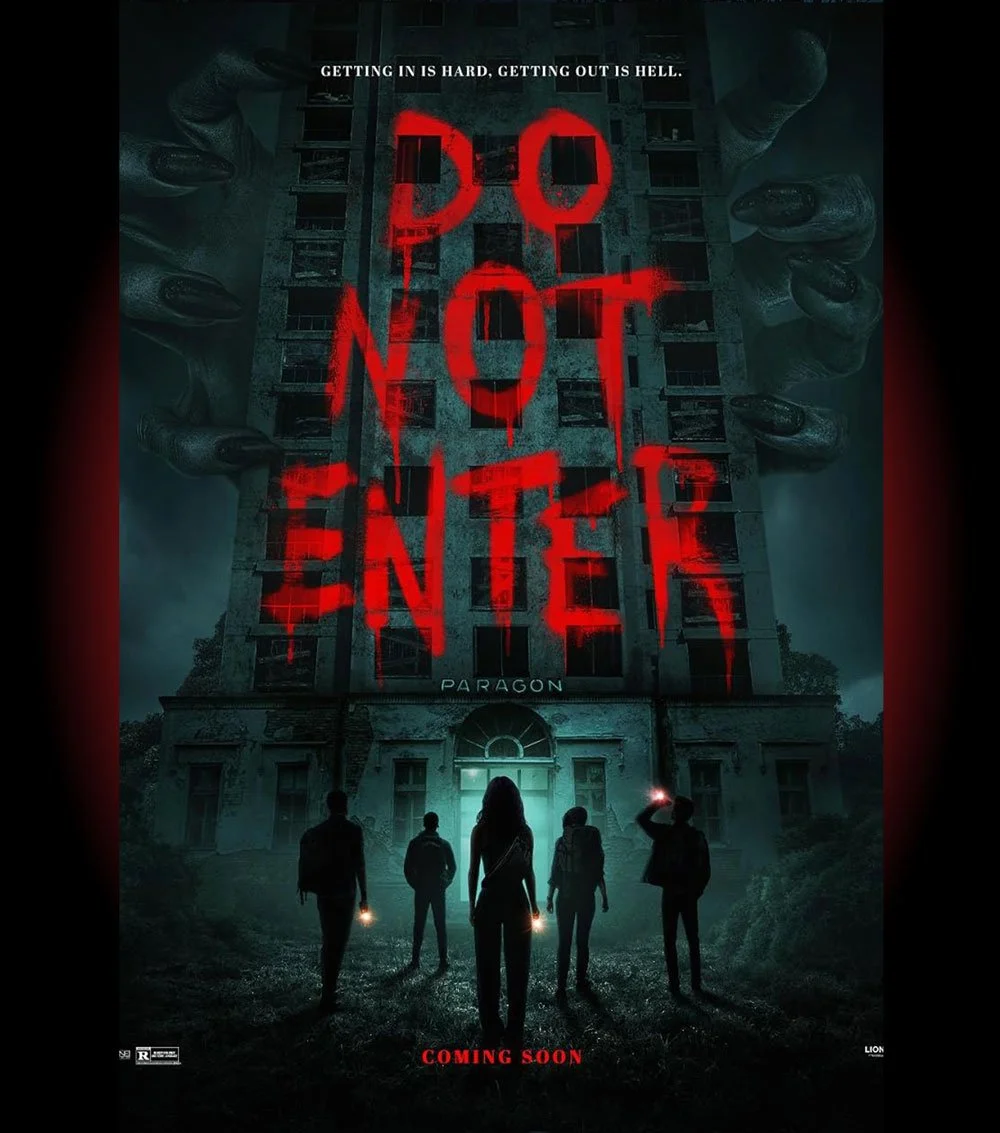
I will admit to loving this new sub-genre in horror where horrible things happen to obnoxious influencers. It has been a staple of recent horror, and… I’m here for it. The more horrible the better. 

This movie features rival teams of obnoxious YouTubers vying for social media prominence, doing crime and seeking out creepy locations. That horrible things will happen to them is a given, and while the film does its best to distinguish the ‘good’ team from the ‘bad’, I am indifferent to the nuance and simply want horrible things to happen to all of them. 

The film mixes survival-horror with livestream gimmickry and adds a creature. Francesca Reale and Adeline Rudolph provide the only watchable elements in a film barely watchable in a literal sense. Most of the scenes are too dark to discern, and the entire palette is shrouded. 

Unfortunately the horrible things that happen aren’t horrible enough. It feels a little tame for what it aspires to, and the threat, once unveiled, is goofy. This film promised gore, dread, and the satisfying spectacle of influencers getting what they deserve. Instead it delivers baffling lore, unlikable characters, and no reason to watch. 

D

Alien: Earth (2025)

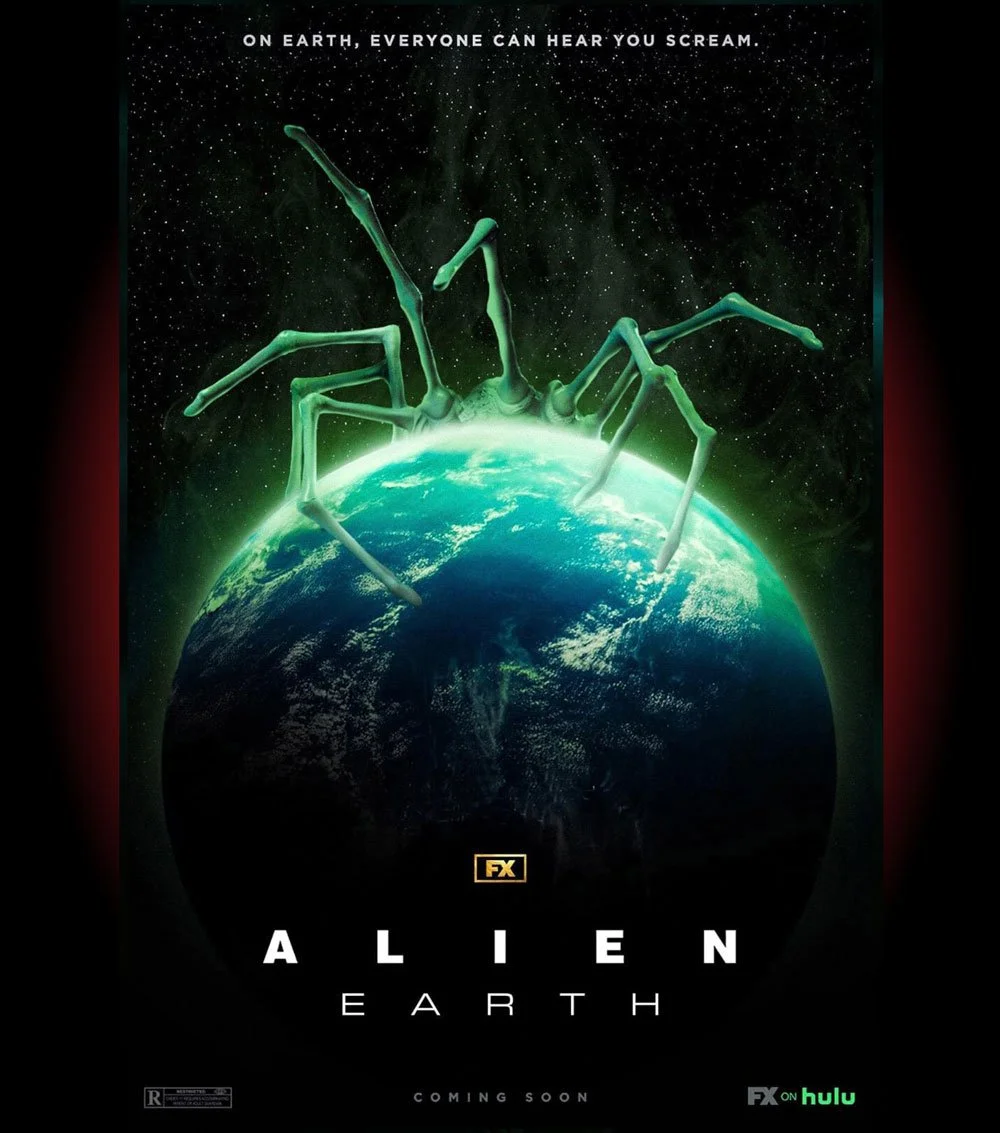
I am a slavering franchise fan, down to having played the video games and tabletop RPG, read the comics and novels, watched all the behind-the-scenes, director’s cuts, assembly cuts, etc, and still own action figures. The idea of a television show based on the franchise seemed questionable, but the talent behind it, Noah Hawley has never disappointed. So I withheld judgement although each trailer and snippet stoked my anticipation. The RPG, Isolation and Romulus gave me fresh hope for the IP, so once Alien: Earth dropped, it became my weekly mandatory viewing.
This started strong and stayed that way for about five of its eight episodes. Not that there aren’t justified complaints throughout. It suffers from many of the Alien franchise's hallmark issues. Supposedly smart people doing dumb things: check. In fact, there are several moments where it is lampshaded and deliberate. Weird pacing? Yes. Pretentious ambition? Oh absolutely. The writing definitely aspires for bigger themes than it can deliver. Sci-fi questions about the nature of consciousness, corporate malfeasance, the exploitation of the natural world? Yup. Body horror and slimy things? Doubly, nay triply checked. These are not the problem.
Humans are the problem. This also extends to Cyborgs and Hybrids, which the show defines through opening scrawl. Synthetics seem to actually get the best representation. Timothy Olyphant gives what might be my favorite performance of last year, each movement and mannerism measured and maximized for optimal delivery. There’s so much happening behind his polite exterior that this performance is worth the price of admission alone.
Unfortunately, the rest of the characters are hit or miss. The premise of sticking a child's consciousness into an artificial body is a fascinating one, and the actors do a credible job in playing it, but the Peter Pan motif wears quickly. It is also one of the points that stretches credulity to breaking. The idea of letting super-powered children simply wander around unsupervised does seem like a glaring oversight. The supposedly boy-genius character is annoying to the point of frustration, not just to viewers but to every other character in the series.
The worst the series has to offer is bad writing and convoluted motivations; the best thing the series has to offer is stepping away from the Xenomorph and introducing new species. And here the series absolutely does not disappoint, introducing four additional creepy things that each has their own immediate place and presence in the universe going forward. T. Ocellus needs to be a plush toy immediately. If Disney had any sense, they would be pumping those out like Baby Yoda merch.
Lore purists might rail against changes to the universe, but considering the franchise lows, this seems a nitpick. The alien itself suffers quite a bit in this series, from strange design choices to an absolute lack of dignity. It retains a lot of the ‘man in a suit’ movement and feel, and is not as dynamic as we’ve seen in other media. It looks far more rubbery than the sleek and sexy biomechanical nightmare Giger introduced. By the end, the Xenomorph is treated like a pet as the writing takes a nosedive. The best characters are short-changed, the worst are given more screen time, the payoff for the big questions never arrives, and the season ends on multiple cliffhangers.
Whether or not the series can redeem itself in a second season remains to be seen. I will tune in, but with tempered expectations and the hope that much of what’s been presented is setup for something better.

C

Ready or Not 2: Here I Come (2026)

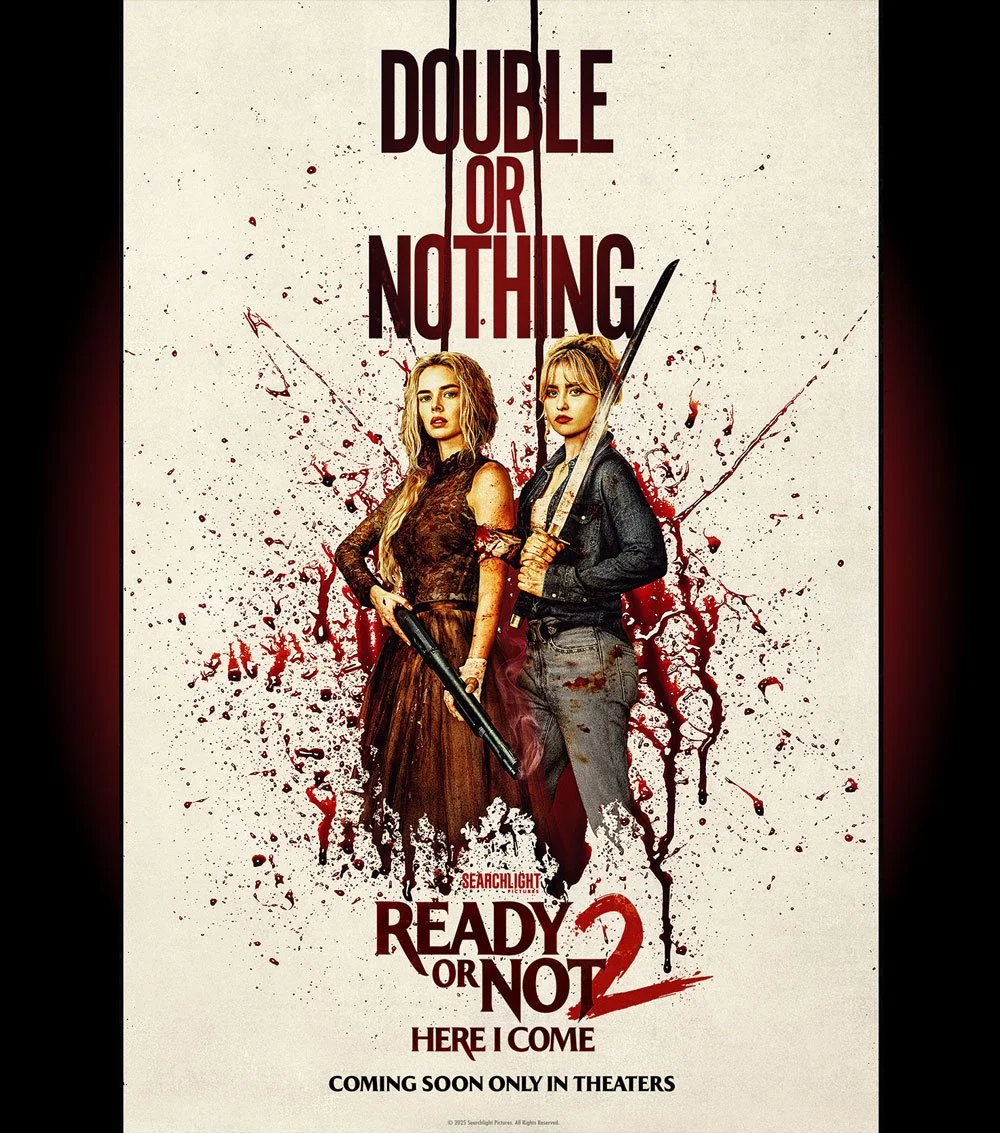
Spontaneity can’t be summoned, and Ready or Not 2 doesn’t bother. It goes bigger and louder, increases the stakes and adds sibling dynamics. It also abandons horror in favor of action and jokes.

This is fun. Class warfare to the extreme while maintaining an impish sense of humor. No one is safe or sacred, Bodies explode at regular intervals, and there is no shortage of creative kills.

Performances sell the ludicrous, standout being a fantastically weird Elijah Wood and runner-up Sarah Michelle Gellar vamping up her villainous side. Both are a blast. Always quality leads, Samara Weaving and Kathryn Newton, play siblings with a great dynamic.

And their chemistry is great, but subplots are not. Their estrangement and constant squabbling grate. Banter and quips are eye-rolling, and there is overindulgence in lore dumps. But Wood bearably delivers the exposition on pacts governing conspiracies of occult oligarchs and satanic tech bros. Unfortunately, the film is painfully self-aware and the commentary delivered via hamfisted thud.

This is action-comedy cosplaying horror tropes. There are moments of brutality and violence that momentarily let its horror roots show, but these are outliers. This film is in it for the lolz, and the similarly flavored They Will Kill You is the better horror (and action) option of the year.

B- (D for horror

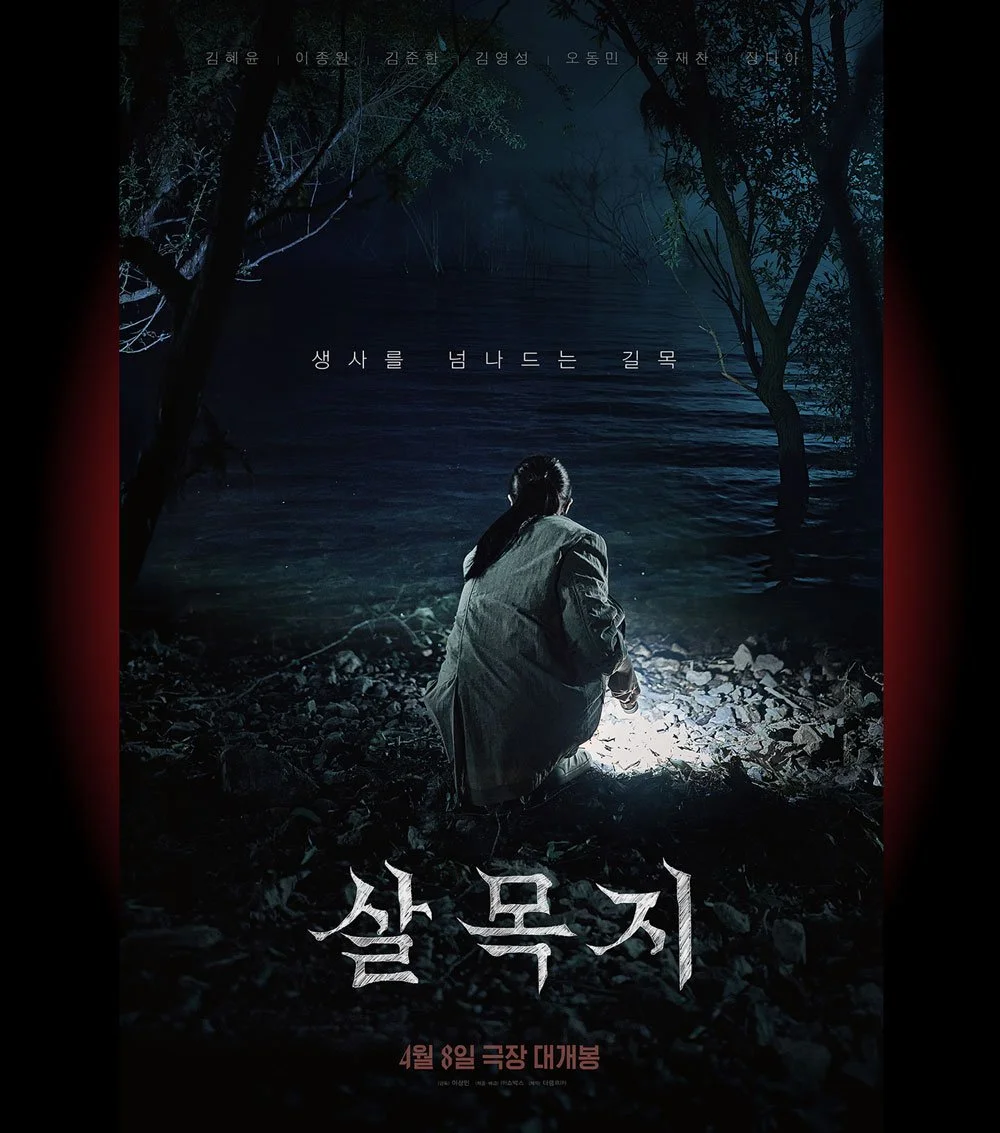
Salmojki (2026)

Asian horror’s ghosts seemingly bring an extra level of creep. Even just sitting in a reservoir, getting soggy, they carry that aura. Salmokji is a real place in Korea renowned for hauntings and there is a strong focus on localized lore likely lost on audiences. 

The shamanistic practices the film depicts might make sense, but it seems like the director just chose elements in a ritualistic ad lib. There’s an exposition shaman that shows up to explain the mechanisms, but she just kind of vanishes without delivering any clarification and is never seen again. The rules and mythology are as murky as the reservoir’s waters and don’t really seem relevant, as these ghosts are going to do whatever they want. If they find you in the water, they’ll drag you down. Gone. No catharsis, no comfort, no way out. What emerges is something else. 

The film mixes in elements of found footage, but with reason and purpose. These are video surveyors, on the clock when they arrive. They have a job to do, and bosses are unsympathetic to the superstitious. But they get new and interesting toys to play with. This movie introduces some unique camera variants for the found footage elements. 

These aren’t characters that all like each other, more forced into a working relationship. But they do work together, challenge each other, and try to keep each other from making stupid decisions. Try being the operative word. It doesn’t stop any of them. And it certainly doesn’t help, because these ghosts are mean and seemingly invent new powers at whim. The last act can get baffling, as reality and the character experiences stop aligning, but  

 As it stands, this isn’t exactly top-shelf for Asian horror, but still delivers the goods. Creepy location with malicious ghosts. Plentiful jump scares and grisly sights. There’s a playful bleakness that infuses the atmosphere and an uncompromising nihilism. Even weaker entries in the genre still manage to give decent chills, and this is an entertaining watch that will make you yearn for an absorbent towel. 

B-

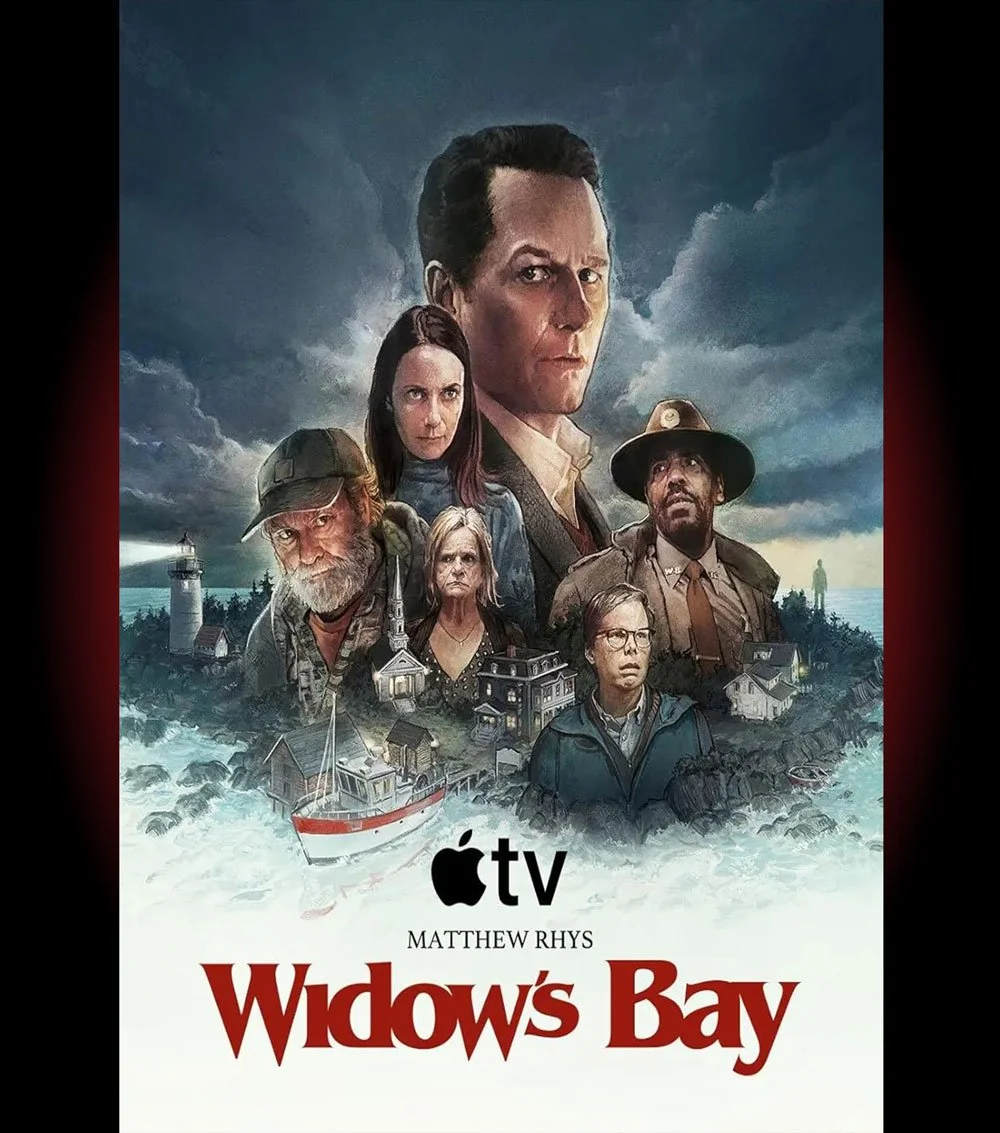
Widow's Bay (2026)

Widow's Bay is without hesitation the best horror/comedy blend seen since The Cabin in the Woods. Take the mayor of Amity from Jaws, drop him on an island steeped in John Carpenter, season heavily with King and Lovecraft, then add a dose of surreal absurdity. Somehow the show delivers more hilarity the darker it gets, from occult rituals masquerading as bachelorette parties, characters quaffing strange brews of mad fungi to gain esoteric secrets, or meticulously bureaucratic instructions on the purpose and maintenance of sacrificial rites. The eccentric population of the town, with the exception of the hapless mayor, is wildly genre-savvy. They’ve spent their entire lives on a cursed island. They know the rules, even if the mayor does not, and have no qualms about calling him out on that. This knowledge also serves to upend viewer expectation. The creator understands you know the game, then changes the sport while you’re not looking. 

Each episode serves individually as a shrine to a horror staple. It riffs off homages, but the influences serve as ingredients rather than definitions. The show masterfully takes your understanding of the blueprint, then twists the familiar trap. Most of the episodes could exist as stand alone complete stories, but once the bigger picture is unveiled you realize how meticulously this show has been building its mythology and endgame. Small details from early episodes come back with teeth. Throwaway jokes turn out to be warnings and prophecies. Offhand references become the foundation for stark, horrific revelation. Clues hide in the backgrounds and set design, and like a clever magician, the trick is played right before your eyes, challenging you to watch closer. 

The tonal balance between horrific and comedic elements is chef's kiss perfection: one augmenting the other and gold on every front. The writing is so well done, there’s not a character without nuance, quirks, and a number of laugh-out-loud moments, and every line is sold by consistently phenomenal acting. Not a beat is missed, every joke lands, and even characters written to be obnoxious tropes have a surprising sympathy and resonance. The Emmys agreed: a record fourteen wins for a comedy, with Matthew Rhys, Stephen Root, Kate O’Flynn and Betty Gilpin all taking home statues. All deserved. While the series could end contained and the outstanding questions left to interpretation, it is a joy to know another season is coming. This was my year’s favorite treat, and I cannot wait to see what the next visit to the Bay reveals. It could be the next Martha’s Vineyard. 

A+

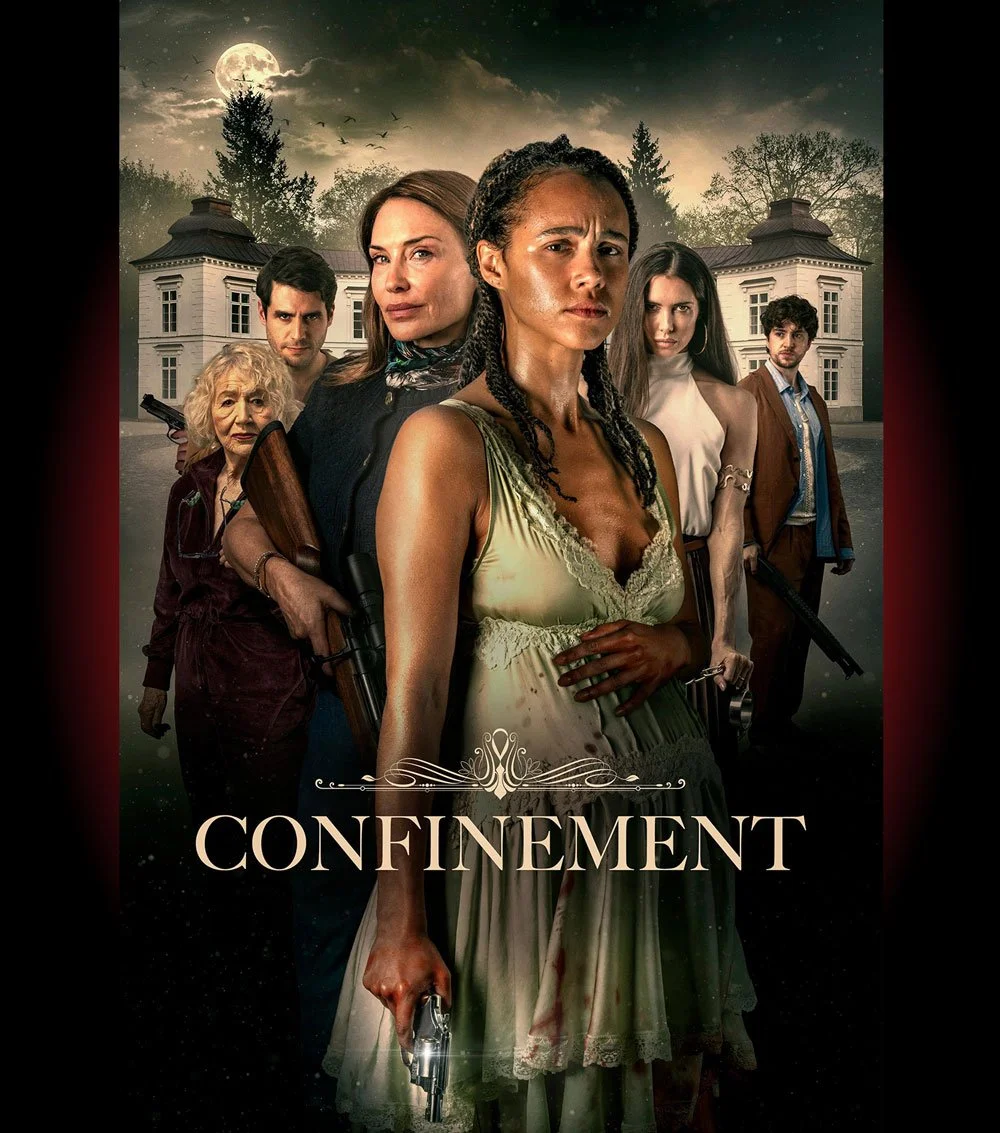
Confinement (2026)

A committed cast barely elevates what is a forgettable film covering the same ground as every other class-warfare horror. Director Howitt tries to channel Jordan Peele and Polanski, but cannot match the register of either. He understands the intention of what he’s mimicking, but relies on exhausted tropes and predictable beats. The film is a mixtape of better concepts from superior films and tries to pass its cribbed pedigree as homage as opposed to laziness. Nathalie Emmanuel has been playing this character study of a Black woman meeting unhinged white affluence to the point of rote repetition, except this time she’s pregnant. She still gives it everything, as does the supporting cast. Claire Forlani delivers a fun and menacing performance that is better than the film deserves, but there’s little else worthwhile in this rehash.

The drone exterior shots of the English estate are gorgeous, but once inside there’s a contrasting claustrophobia. Very few rooms, each lavishly dressed, suggest the minuscule budget went entirely into the sets, which makes the film feel built for a stage. It might play better in a theater, where the lulls in action and long stretches of character reflection could be boons rather than detriments. On screen, what would work live becomes dead space. Then again, there’s a high chance it wouldn’t work in any medium.

The film’s major flaw is that it bores. Absolute tedium… Nothing happens for much of its runtime. Each beat is stretched, there are no scares, and the ending is telegraphed from the opening credits.

D+

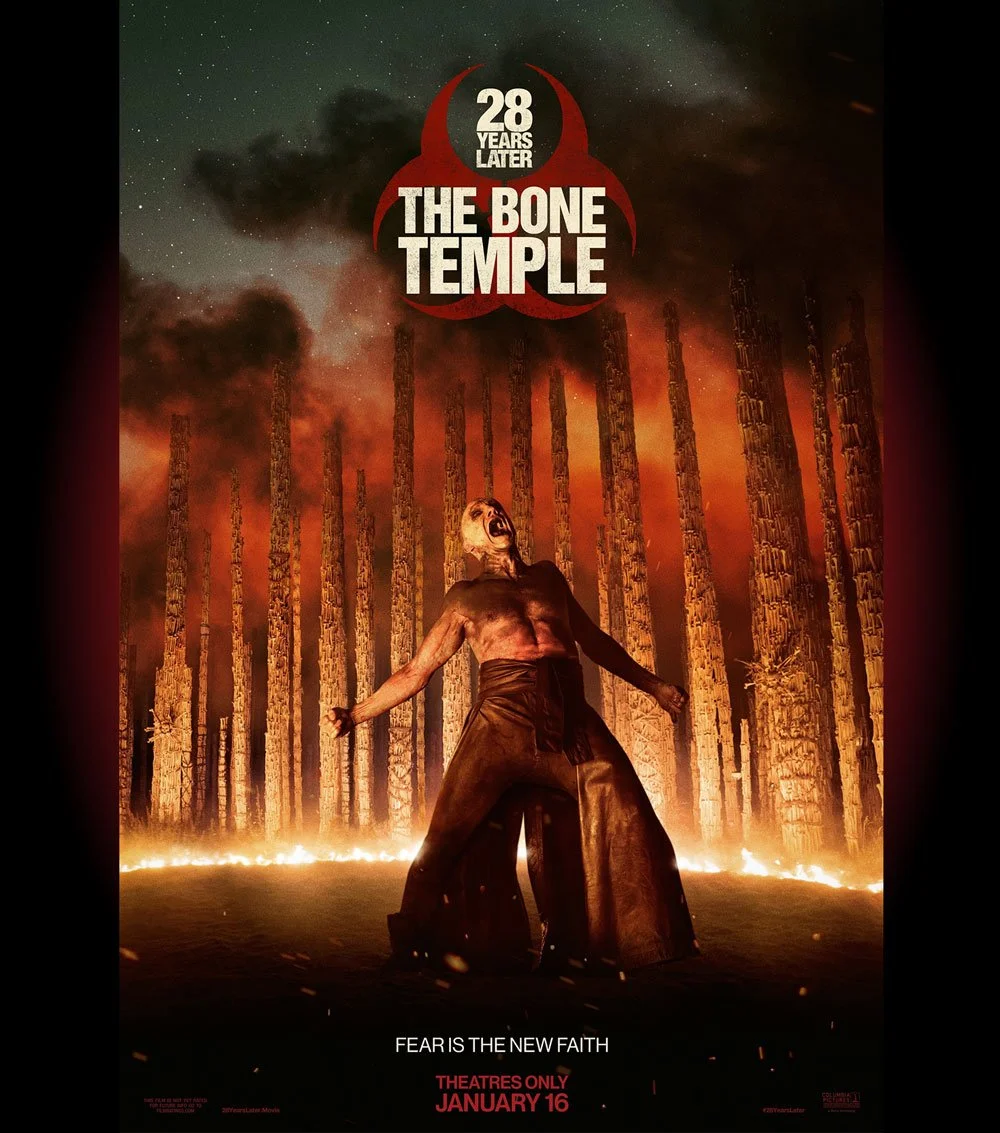
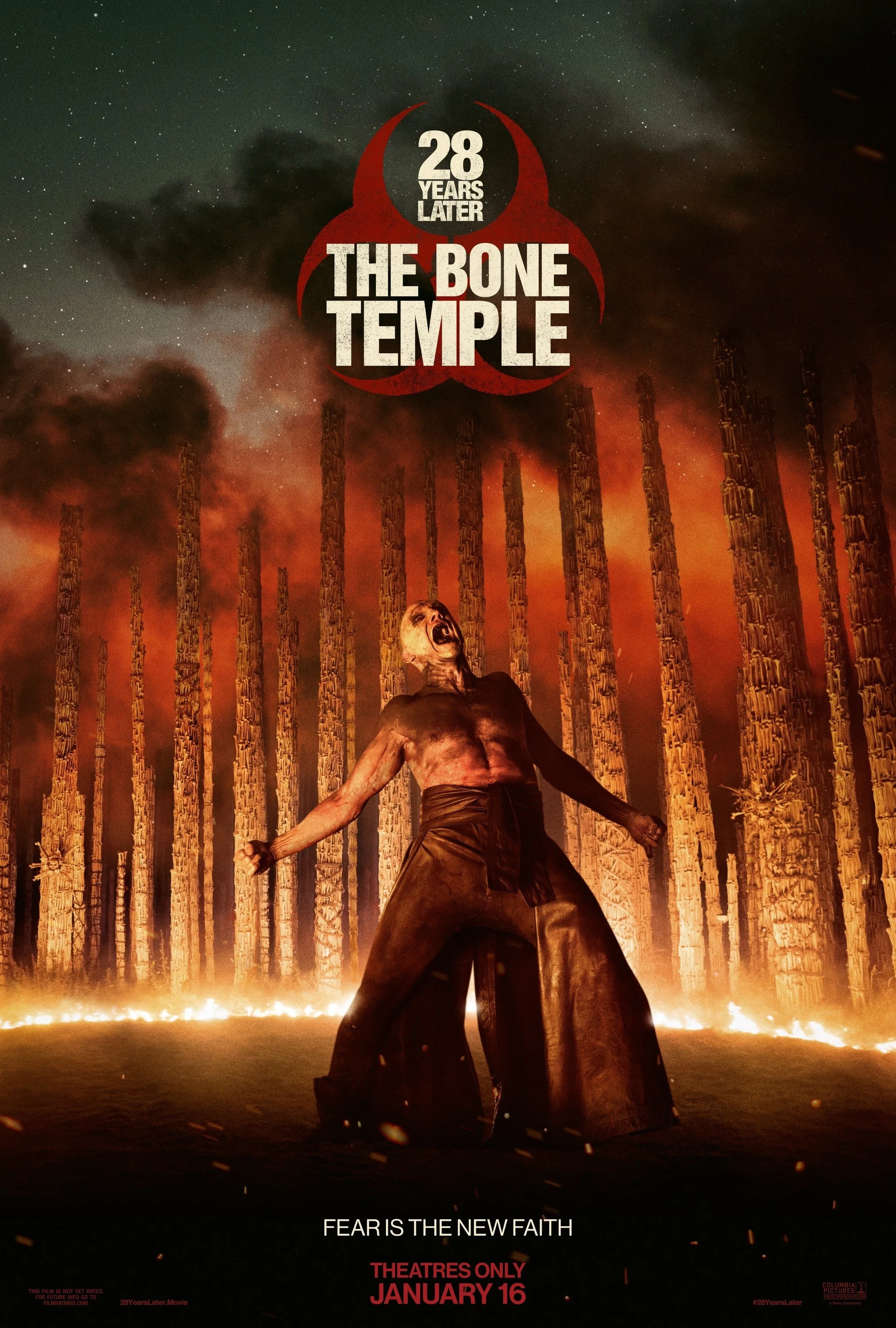
28 Years Later: The Bone Temple (2026)

28 Years Later resurrected this franchise after nearly two decades of dormancy, but alienated audiences in the process. Rather than a return to the fury of the rage-infected, viewers were delivered a philosophical contemplation on the nature of death and community. It was meditative and mournful, where audiences expected terror, and the rage-infected themselves seemed relegated to the periphery. The ending was so jarring and tonally disjointed, it doubtless drove audiences from this follow-up, which is a shame as this is the superior film and pays off some of its predecessor’s most outlandish choices.

Nia DaCosta takes over from Danny Boyle and comes out swinging. Her filmmaking is ferocious, delivering some of the nastiest moments in a franchise known for the grotesque. She rectifies complaints about the lack of horror in the first while still exploring the philosophical notions, and adds a surprising amount of humor. The infected are still largely scenery, but the greater horrors are driven by a different ideology. 

There are two temples in this film: one, a field of sky-reaching towers of skulls patiently erected by Fiennes’ Dr. Kelson, and the other a violent cult of devotion to a false idol and self-anointed prophet. Each represents an extreme: a track-suited congregation of feral children reciting a gospel of violence, and a humble doctor who reveres the dead in service to the living.

Ralph Fiennes delivers an extraordinary performance, even by the standard of his exceptional career. He is gentle and absurd, philosophical and profound. Jack O’Connell meets him at full intensity as a villain desperately needing to validate his personal theology. He preaches a sermon of violence as virtue and atrocity as sacrament, proclaiming himself the devil’s heir to a dead world. The conflict between their churches is what propels this movie into one of the greatest set pieces of the year. 

The Jimmy Savile metaphor is what has divided audiences of these films. It is simultaneously a brilliant literary device, giving Brits a signature figure to epitomize human evil, and a baffling, brightly colored enigma to wider audiences. Fortunately, the intricacies of his case don’t matter here. Anyone who has watched a crowd adore a charismatic monster understands the mechanism. In a post-apocalyptic setting, with only fragments of the old world left to worship, it isn’t strange that children would pick the wrong idol. It’s inevitable.

It isn’t perfect: the tonal swings are jarring, there’s a lack of infected, and the dread is replaced with spectacle. The supposed main character of this series is reduced to a side-player, and seemingly lacks the autonomy that carried him into this sequel in the first place. This is also a film that cannot stand without the first, yet finding the connective tissue between major elements requires a bit of work. 

This film was punished for the sins of its predecessor, though it delivered exactly what was promised. A contemplation of faith and fanaticism, a demonstration of compassion over cruelty. The question simmering beneath it all is whether, past the rage and the atrocity, anyone is truly lost. 

And the film answers with a quiet non-answer: faith can spawn from anything. Even bones. 

B+

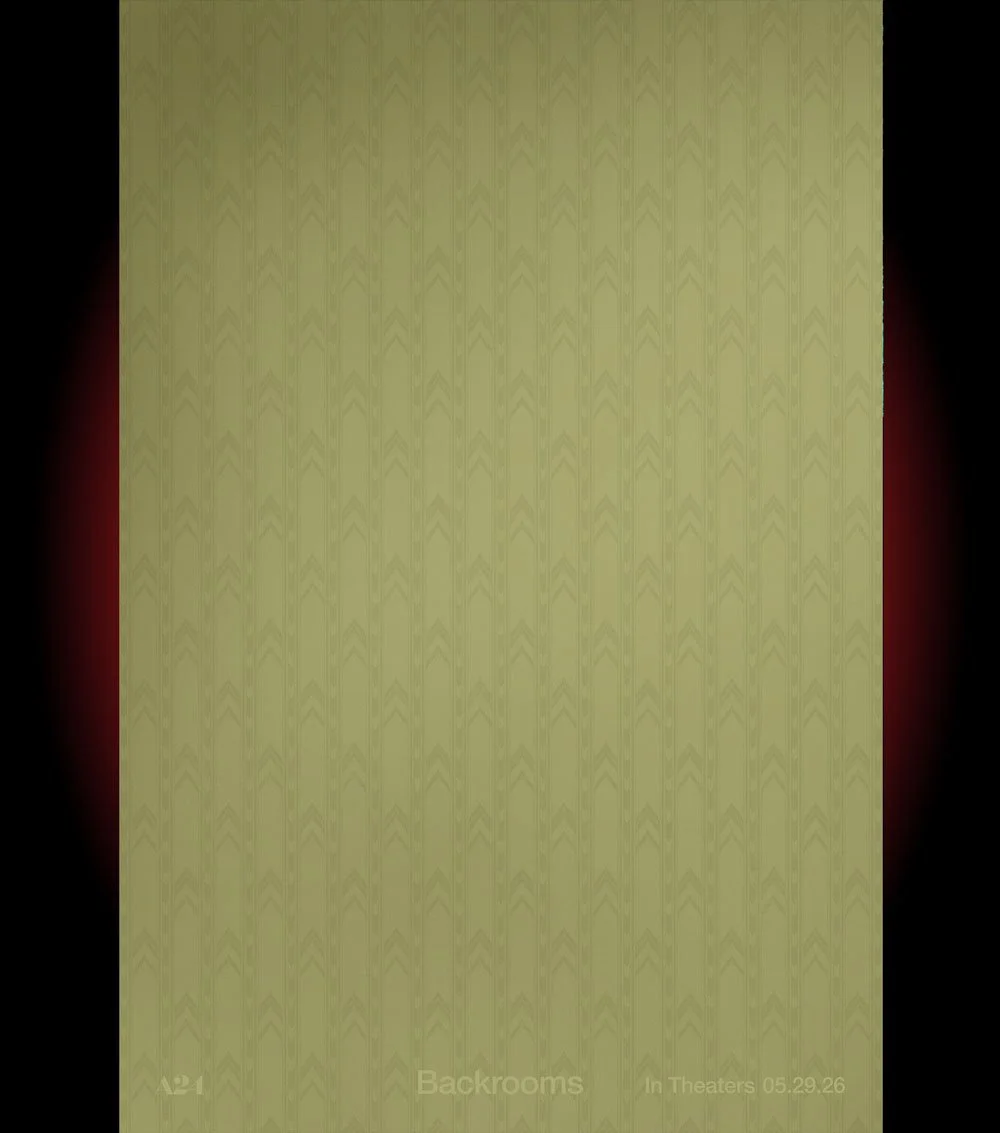
Backrooms (2026)

Since its inception, I’ve preferred the Backrooms as a concept more than in execution. The idea of a liminal space of endless corridors and sickly-hued office spaces just a thin membrane away from our reality. It works best in ambiguity and the unknown, and attempts to define, document and explain often detract from the concept’s potential. Kane Parsons did not invent the Backrooms, but his YouTube series brought it its greatest fame and widest audience, enough that studio A24 gave him the green light to craft a feature of his own.

The look is right. The hum, the wallpaper, the disquiet of a hallway that runs a little too long are all rendered with real care. Parsons has a sharp eye, and the cinematography and sound design are effectively crafted to augment the mood. What starts as wonder begins to unsettle, and once it becomes apparent other entities share this space, it escalates into dread. It is well executed, but like the rooms themselves, the story is sterile.

The film’s misstep is to assign the Backrooms a purpose. It is an interesting notion that the rooms “misremember” the world informed by the visitor’s trauma and experience, but the concept is given scant room to breathe. The character journeys substitute metaphor for meaning and delivered through exposition. The space becomes an illustration of a damaged man who finds validation of his grievances and gripes, echoed and reconstructed in the endless space, with a therapist on hand to explain.

The film reaches for adult weight, for people stuck in their own loops of self-vindication of their self-sabotage, but delivers the equivalent of a pop-psychology lecture. Parsons has clearly matured as a director, but the script is far from seasoned, speaking with the voice of someone who has read about regret without having lived it. 

The film feels unfinished. The last act is rushed, and that’s being extremely generous. The threat reveal elicits more laughs than shudders, and this confrontation ends with an egregious deus ex machina. The biggest lore drops come in the final minutes, and the effect is less a conclusion than a setup. Doubtless Parsons expects to be making sequels for years to come, but that leaves this film playing like a pilot episode rather than a contained story.

Those seeking an expansion of the Backrooms mythology will be disappointed. Those seeking genuine scares will be disappointed too. What is left is an interesting prelude to what will hopefully be a more fulfilling next visit, one that returns to mystery and ambiguity. The terror of the Backrooms is not that they stand for anything, but that they exist and stand for nothing.

C+

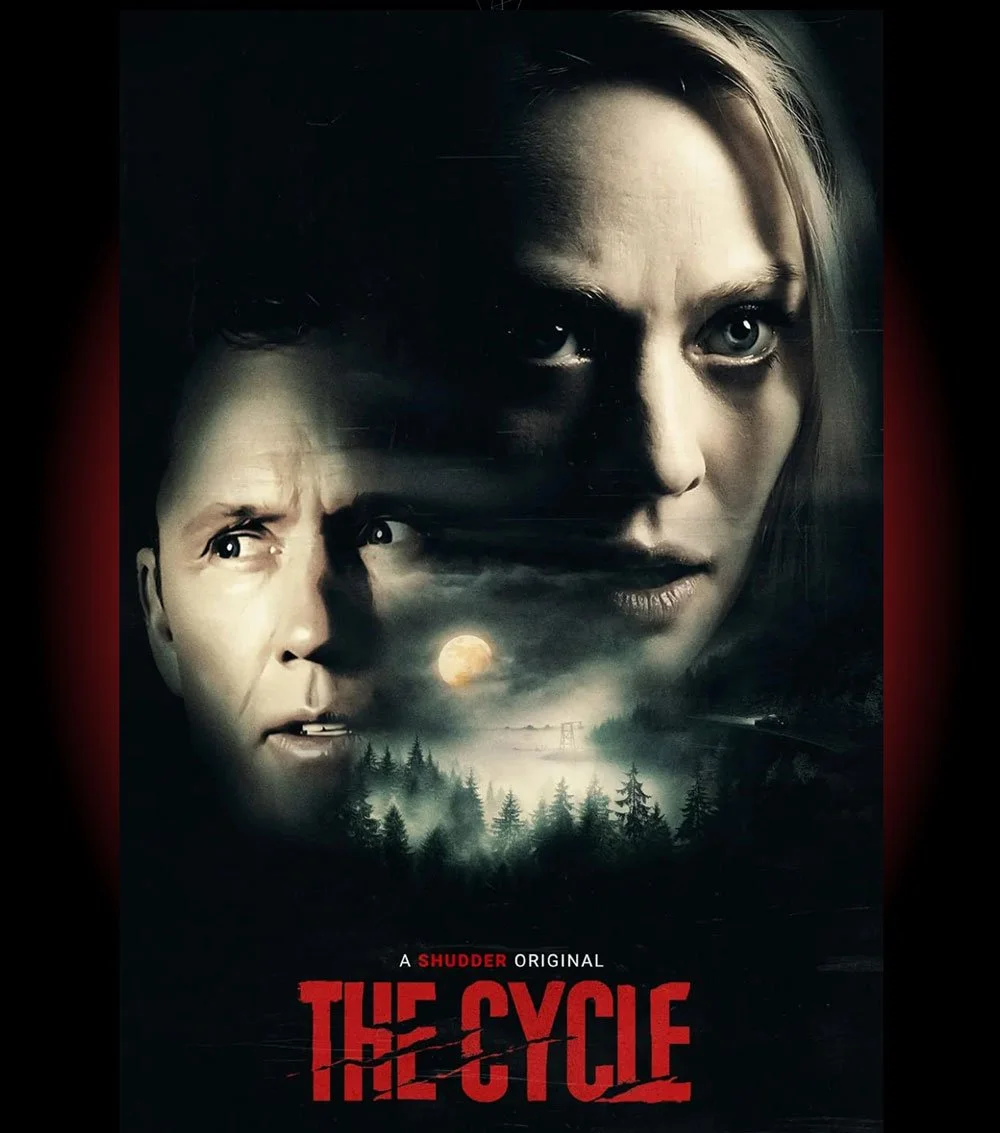
The Cycle (2026)

Late into the runtime, The Cycle takes a turn. What starts as a moody and somber police investigation shifts into creature horror complete with some memorable practical work. The marketing has done a disservice by giving that turn away. Committed genre fans will likely guess the twist early, but regardless, the slow build and methodical investigation are core to what makes this movie work before the horror elements are revealed.

Deborah Ann Woll carries the entire first half, playing a seasoned forensic investigator whose latest case collides with her unresolved past. The supporting cast earn some honorable mentions, but she’s really the vehicle for the film’s journey and themes. That delivery is one of the weaker links, heavy-handed and executed awkwardly through some clumsy character discussion and exposition that instructs the viewer in how they should feel. Woll manages to rise above it. She is immensely watchable, and this is easily her career best.

There is a decent amount of gore, and the movie is not shy with the grotesqueness of the forensic investigation. The director is known for more comedic fare, so it is a genuine surprise he plays it entirely straight, even where parts of the script could easily fall into parody and camp.

There is real craft and much to recommend here: a brooding score, the performance, and an old-school commitment to a genre staple. But for every element that lands, there is a counterpart that drags. The Cycle is a slow burn that borders on guttering, leaning on atmosphere to carry the weight and paper over gaps in the script. Decently framed direction and cinematography give way to shaky-cam and jitters in the last act, which, while it hides some practical seams, detracts from the overall quality. The payoff delivers and is certainly worth the wait, but the wait could be shortened easily by a good 20 minutes.

This is a decent movie trapped inside a long one, but still shines.

C

Crawlers (2026)

Anyone utilizing spiders in a horror scenario has an immediate advantage. Spiders have an innate creepiness in how they move, and an alienness about them that makes them immediately unsettling for most audience members. I mean, why do they need all those legs and eyes anyway?  

Every spider movie gets this element for free, so it is up to the filmmakers to try for something original. Here the movie fails most egregiously. Elements of this film directly and blatantly rip off the vastly superior Vermines (Infested), including a number of hallway shots, the nature of the spiders’ reproduction and the setting. Spiders infesting a high-rise is far from a unique or original premise, and there are only so many ways to present webs and spiders skittering towards a victim, but there are far too many overt similarities to handwave it as coincidence. 

This is where similarities end. 

Vermines was good. This is not. 

The filmmakers abandon any pretense of subtext or deeper themes in favor of a purely superficial thrill-ride. They likewise remove any of the social commentary or well-drawn characters, instead opting for a cornucopia of Hollywood writer caricatures of what they imagine humans might be. There is a pretty hilarious montage of despicable tenants, like a speed-dating exercise of the most obnoxious and entitled stereotypes of the current age, but dialed up to cartoonish exaggeration. You will quickly root for the spiders, perhaps making an exception for the protagonist as she tries to lead survivors to safety. 

There’s little new to see here but enough to make one wince, and likely keep arachnophobes in a state of perpetual tension. You get spiders at every turn and in various sizes, so your particular brand of arachnophobia will likely be satisfied; however, many of the shots drag on uncomfortably long as you wait for the inevitable attack. An advantage to CG spiders is that they’re easy to render, duplicate and composite, so there’s no real need to utilize real spiders like in Vermines if you’re simply making a cheap imitation. There is some rather satisfying gore to offset the hordes of digital spiders, but the severe tonal whiplash that follows is jarring. I will admit to laughing at least twice, once at a particular tenant, and the other when several spiders get painted in a Spider-Man aesthetic. Plus there are entire sequences allowing the director’s barely disguised fetish to play.  Unfortunately, this is not funny enough to play as a comedy, not scary enough to play as horror, and clearly not original enough to present as anything but a pale knockoff. Regardless of the number of legs and spiders involved, they cannot carry this film, and the human characters aren’t competent enough to try. 

D

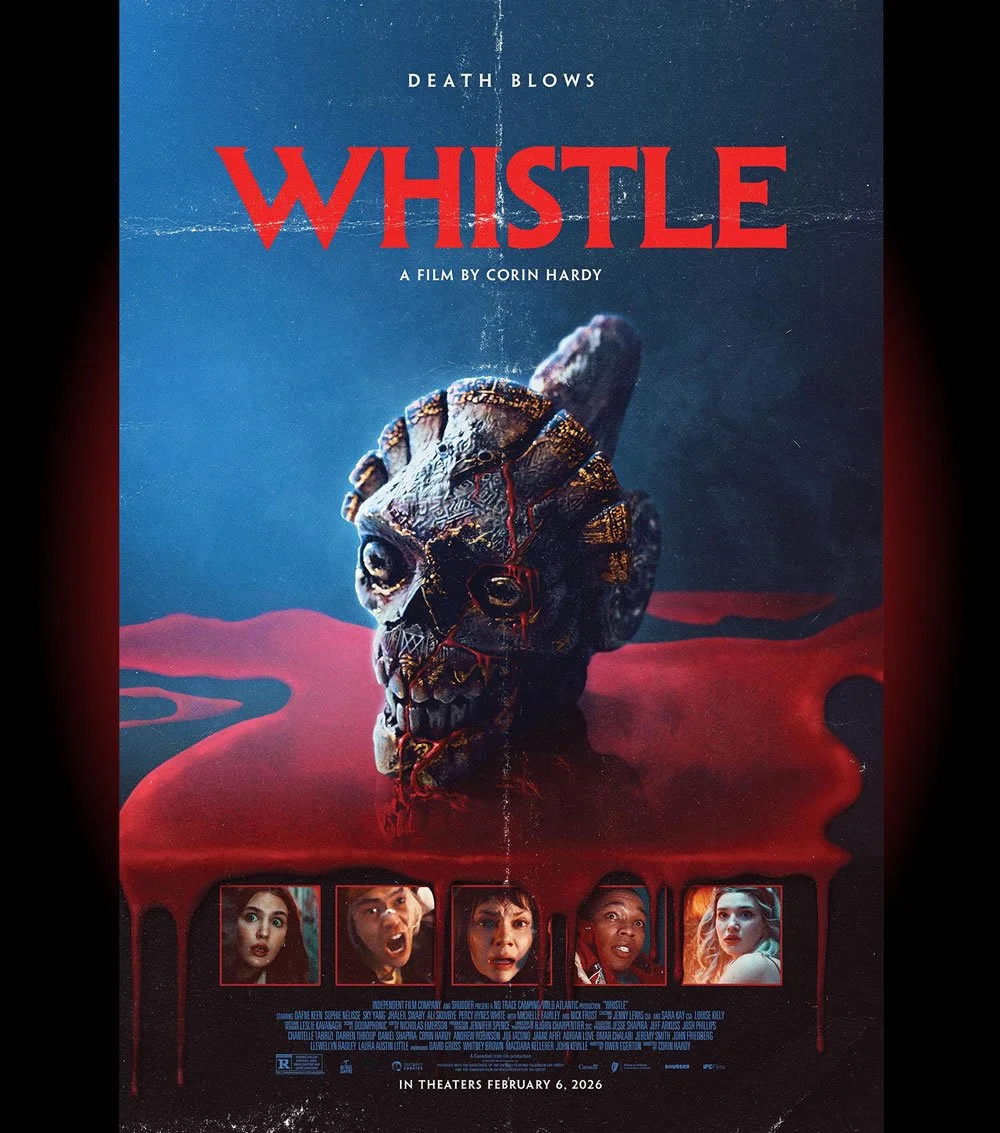
Whistle (2026)

Whistle is this year’s ‘Tarot’, which was the previous year’s ‘Polaroid’, which was the previous year’s ‘Wish Upon’, all the way down. Typical studio entry: Final Destination with extra scaffolding. Find a hook or gimmick to deliver grisly deaths, then craft a narrative around it. The cursed item du jour is an Aztec death whistle. Or is it Olmec or Mayan. Or any other place in Mesoamerica over a span of 2000 years. The script doesn’t know and finds it all interchangeable: get a death god from Guatemala, tell it to adhere to a Mayan calendar, and pass around the whistle. One gets the sense the writers had too many Wikipedia tabs open and just threw in as much as they could. None of the mythology or cultural appropriation really matters in favor of delivering gnarly deaths at a rapid pace.

The kills are certainly quality and there’s a decent buildup and internal logic to each, even if the wraparound film lacks any. They introduce some element of teenage excessiveness or personality trait that would lead to their demise, then proceed to enact that demise almost defensive about needing to explain it. There’s no reason to feel apologetic for a horror movie wanting to dispatch teenagers, and this film does that with relish. Jump scare, clock another to the body count, wash, rinse, repeat. Do the characters really matter? Nah. They get their one distinguishable trait, murdered, then onto the next.

There is an overabundance of CG to the film’s detriment. Lingering smoke trails and Gollum-esque specters that never quite sit in the same physical space as the actors around them have a distracting effect whenever they are onscreen long enough to look at, and that’s pretty often. Otherwise the direction is pretty sound, and the cinematography and use of color are actually commendable. There are a number of standout set pieces and the director can build dread and tension, but these notions just get abandoned quickly in favor of adding to the body count.

There is an 11th hour push to add thematic content and resonance to the main character’s arc, but it comes laughably in a ham-fisted monologue that makes me think at that point the writers had just given up or exhausted their coke supply. They made a pretense of gravitas, stakes and messaging, but just wanted to execute teenagers in grisly ways, and with that mission accomplished needed to get some sleep.

That this is slightly better than others of its fare in the genre is more of a technicality than a compliment. It’s the best version they could execute of a silly notion, but that doesn’t make it any less silly.

C

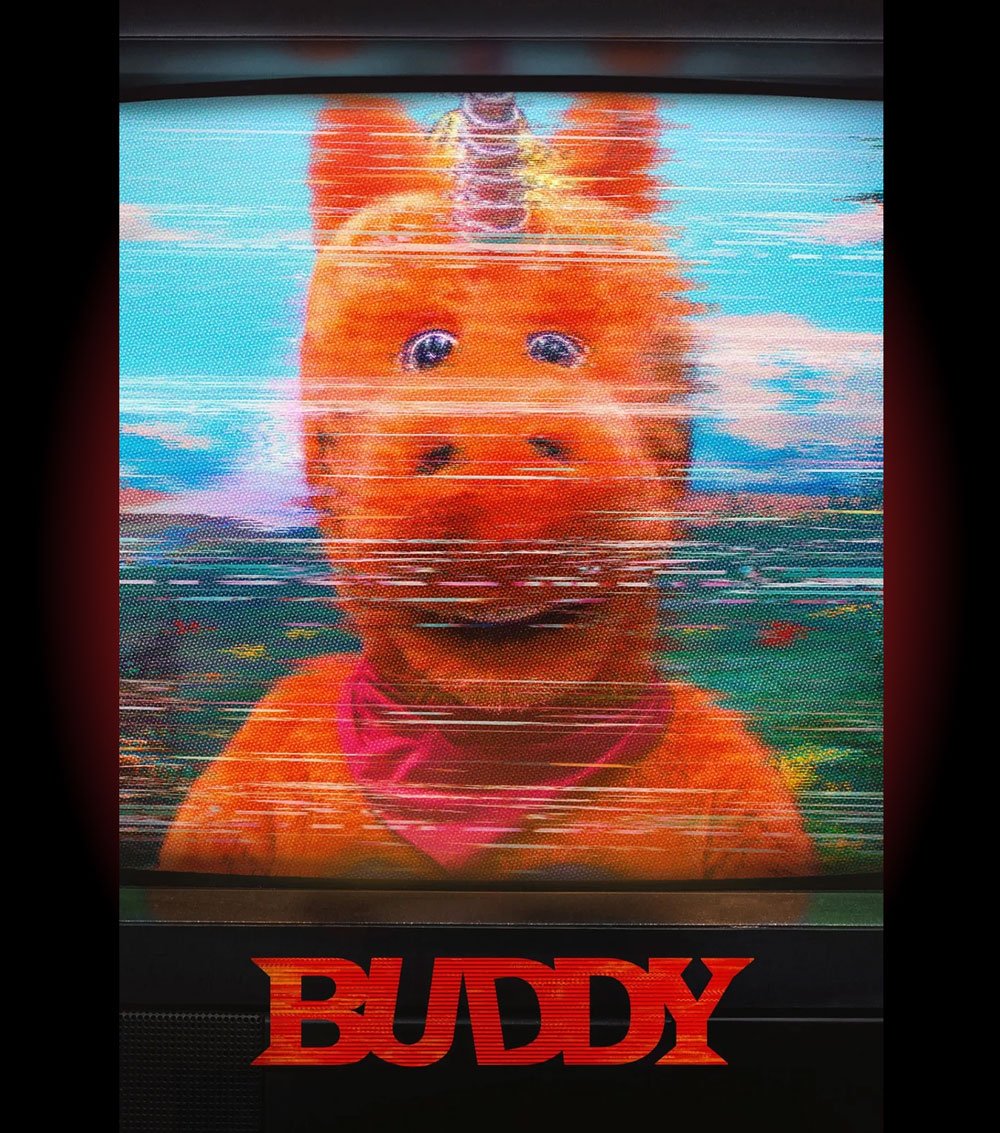
Buddy (2026)

Imagine an endless cycle. 

There are no nights. Only an eternal half hour where everything is bright and cheerful, rendered in hyper-saturated colors. Filled with surreal, animistic creatures that only exist to ensure your happiness. You will never know, pain, hunger, or want. But you will never know anything beyond. Everything is provided by a cheerful King: Buddy. All it demands is your love. And obedience. 

The theme song plays, and the cycle begins anew. 

You awake again, with vague fragmented memories… Figures you may have known. Half recalled friends. Events that might have transpired. Horrors witnessed. But it is lost in cotton candy clouds. 

The theme song plays, and the cycle begins anew. 

A thought might linger at the periphery… How many times has this happened? What happened to the others? What is outside of this? what exactly is this King? 

What happens or has happened, to those that displease him? 

A seed of fear blossoms. 

The theme song plays, and the cycle begins anew. 

A child’s program is the facade for an endless hellscape, lorded over by an increasingly disturbing entity. It presents as a cheerful children’s mascot, but its motivations are unfathomable. The premise is played entirely straight, and builds dread and disquiet quickly. There are rules to the realm, that even it must adhere to, but reality warps around its whim. Not just in this world, but many. And what King does this King serve?

It is surreal, vibrant and lurid. It plays like something that should be introduced with a Rod Serling monologue. It commits fully to an outlandish premise, and genuinely questions the means and mechanics for what this scenario might entail and imply. The film is cleverly directed, mimicking childhood staples with remarkable fidelity, then slowly intensifies the terrifying nature of the broadcast. The hyper-saturation of bright colors includes crimson, more and more often. The terror isn’t derived from seeing a colorful kid’s figure turned murderous, there’s an entire sub-genre of ‘mascot horror’, but the implication about the wavering nature of mind, memory and reality itself. 

These are ideas that Kelly has already explored in his other work, and here he’s given free rein to take the premise as far as he wishes, but in some places it wears too long, and in others elements are woefully shortchanged. Regardless, there is little else like Buddy on the horror landscape, and in a genre and year where the best ideas are recycled, it’s inventive and original and deserving to be included in conversations about the year’s best. 

B+ 

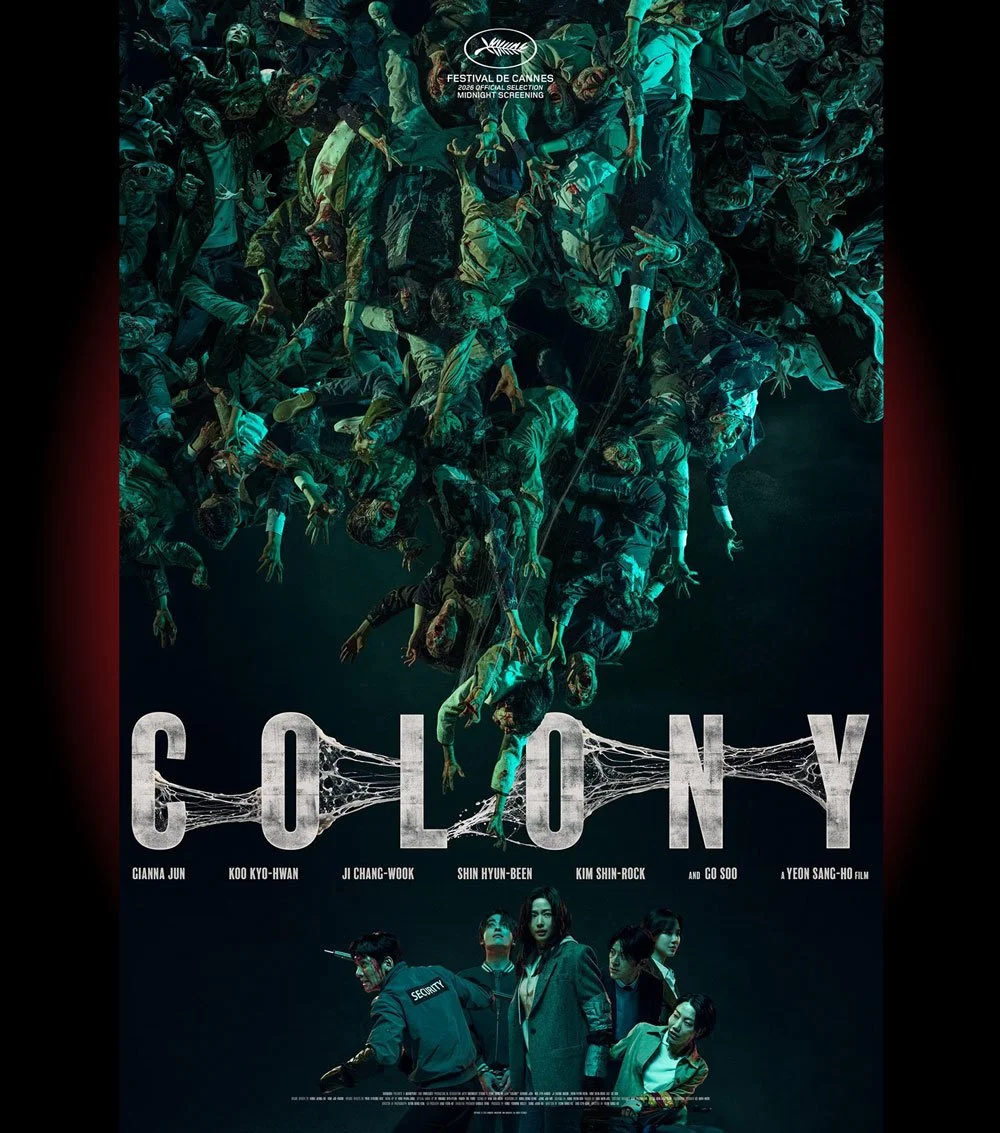
Colony (2026)

What works hardest against this film is its pedigree. Yeon Sang-ho’s Train to Busan quickly became a high bar for zombie horror, delivering an emotional gut-punch, fully realized characters and phenomenal execution. While unfair, the comparison is inevitable, and unfortunately this movie is not on the same level. That said, it’s pretty decent. 

Rather than return to a claustrophobic setting, a towering modern biotech firm allows a vastly larger playground and wider setpieces as the characters move from floor to floor. The pacing and action are breakneck, but the film does pause outside the outbreak to focus on response teams that detract from the barrage. Yeon does attempt to distinguish these zombies from typical fare to serve as his vehicle for social commentary. Unfortunately, it is not as smart as it likes to think. This ground has been covered before, and while the presentation is well-polished, not all the deeper concepts land.

This movie strives for unique ideas, but sacrifices heart and emotional resonance. None of the characters are particularly deep or interesting and the director seems far more enamored with presenting his dissertation than developing any of them. Characters commit the usual sins of plot-demanded idiocy, over-exaggerated traits, although there is one delightfully cartoonish villain to the piece. 

The horde is terrifying. It moves with a nightmarish intensity, morphing through different stages of threat. The individual members are fast, adaptive, and contorting in nonhuman ways as they pursue any moving target. Initially they present feral and animalistic, but before long they are demonstrably changing, communicating and shifting their patterns. Their intention isn’t to kill, but to spread, infect and augment their collective. Increasing their danger and functionality with each additional victim. There is also a visceral grossness to them, spewing and excreting nastiness wherever they go, quickly the visible surfaces are coated in a filth whose smell one can only imagine.  

Now in case you aren’t paying attention, the plot will be explained through gratuitous exposition dumps in a patronizing manner befitting small children and tiny brains. The director doesn’t seem to think you have the capacity to catch the nuance of what he’s attempting to depict, so he utilizes proxy characters to explain the science, character motivation, and the social analogy. And perhaps this is deserved, the movie doesn’t depict humanity in particularly high esteem. 

Colony isn’t Busan, but it wasn’t trying to be. What it is, is a nasty and relentless zombie film that trusts its ideas more than its people and doesn’t trust audiences at all.

B-

Her Private Hell (2026)

Complaints that this film is an exercise in style over substance miss the entirety of Nicolas Winding Refn’s body of work. Each film is an experiment in stylistic excess to varying degree. This one has that dial turned to 11. Each frame is a visual marvel and worthy of being hung as a painting, but the endurance test watching feels like that painting is hung in the waiting room of a sadistic dentist.

This is even lampshaded early by one of the characters in fairly accurate summation: ‘This movie is going to be hell’. I could try to spoil and describe each and every beat of this film and it would still baffle. What sense there is to be had is lost in neon hues and a whirlwind of sensory overload. Which is admittedly stunning. But all that glitters is far from gold, and this movie meanders excruciatingly through two hours of gorgeous slog. 

Sophie Thatcher proves, consistently, that she’s a riveting actress, and she shines amid all the gloss. Yet she cannot bring sense to the nonsensical. She cannot salvage dialogue written that could serve as a coma inducer. She can simply look and act fantastic doing it. Refn has said this film grew out of his 2023 near-death experience, but it lands as white noise and a garbled transmission from the other side. 

Devotees of Refn will find the kind of stylistic excess they expect. Newcomers will be baffled, bewildered and maybe scaroused.  It is something certainly worth witnessing, but lands better as a still-frame as opposed to two hours of indulgent excess. 

D

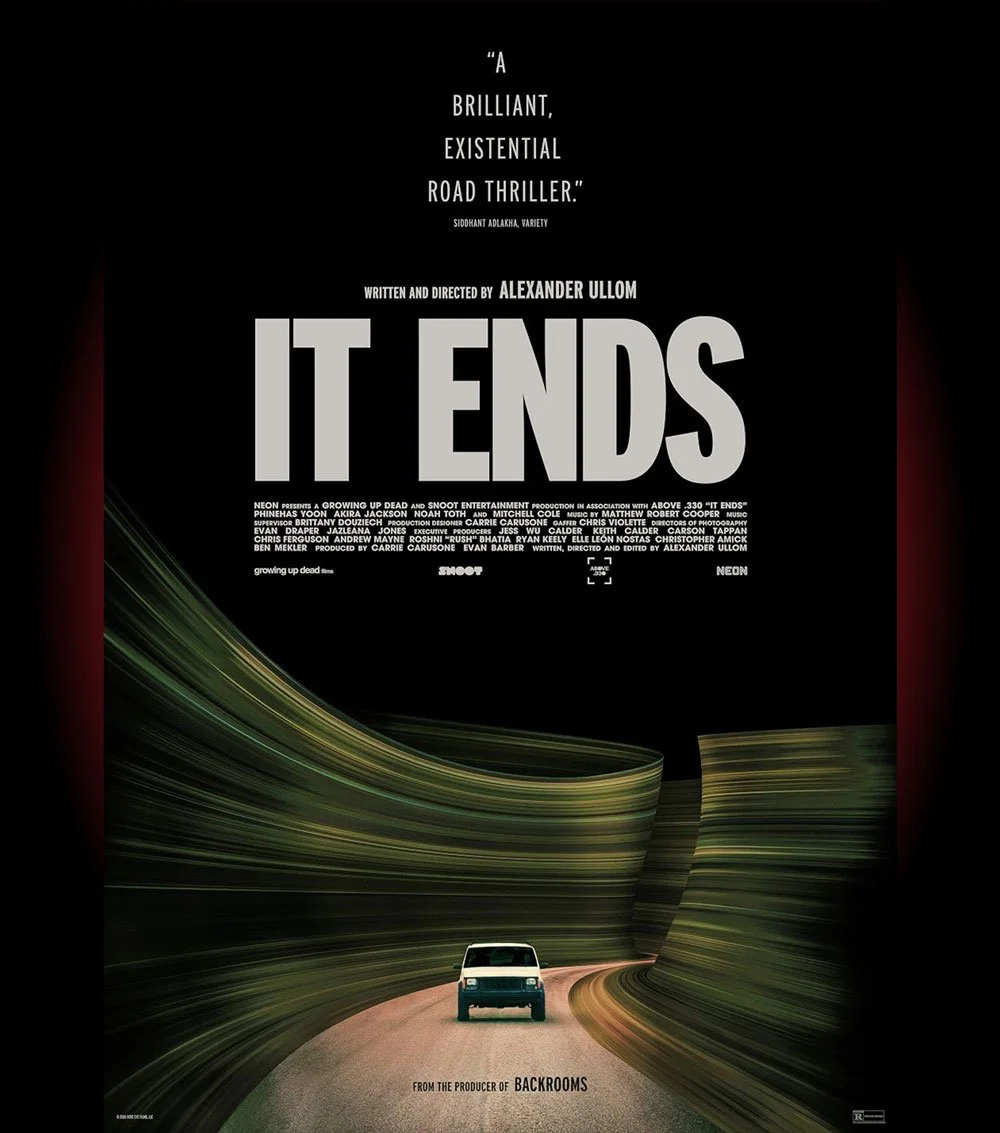
It Ends (2026)

This review may prove divisive, as will the film itself. This is reflected in the gulf between critical and audience scores, and the division within each. Those seeking conventional scares, jumps, jolts, or roller-coaster thrill rides best look elsewhere. This is not that movie. And nobody eats a cat. 

My initial assessment of this film was that it was a Gen Z adaptation of ‘No Exit’. While that is an easy comparison to make, and elements of this film certainly evoke Sartre’s existential masterpiece, this is an inaccurate comparison and this movie is an entirely different work. The more I contemplated it, the more nuance I found, and the next time I considered it, a different perspective emerged. And then I considered it again. And again.  Because this movie lingers and haunts well beyond the closing credits.

The opening seems disarming and might lull one into a state of inattention. We are introduced to four characters and their personalities through banter and shared meme cultural conversations. But I cannot stress enough how exquisitely the framework for everything to come is being laid out in these opening scenes. We are learning these characters in a shorthand that is remarkable and informs every decision that follows in the subsequent 90 minutes. 

Now to address the elephant in the room. This is a film where very little happens and mostly consists of 90 minutes of an endless stretch of road. There are a few scenes of sudden, violent intensity that are genuinely terrifying, but for the most part, this film is not scary, unless you are the type to stare unblinking at the ceiling in a state of perpetual insomnia contemplating mortality, mystery and meaning of existence well past sun’s rise. This is the type of terror to appeal to those whose greatest fears are the dark nights of the soul. 

It is flavored with a distinctly Gen Z perspective. It is a contemplation of the unknown, framed from those transitioning into the next stages of life. Entering a world at the precipice of uncertainty. Not knowing one’s place. Not knowing one’s purpose. Knowing that what you’ve been  instructed is your path, has been a steady stream of lies your entire existence. An endless stretch of road before you, the outcome is unrelenting bleak potential.

This honestly may be a film that illustrates the Lovecraftian axiom: the greatest fear is the fear of the unknown, on the greatest level I’ve ever seen. This is a masterpiece of existential cosmic dread, and executed on a miniscule budget, minimalist setting, and cast with unknowns. The execution is flawless, where the lack of budget and resources only works to its favor, and the endless road demands answers to profound questions. 

And there are answers to these questions, baked into the title itself. But like most journeys in life, each answer brings only more questions. Whether it leaves you in a better place is one of them. But if one of the questions is: is this film worth my time? The answer is an unreserved: yes. As a horror film, I might rate it a C. As a film, it deserves an unreserved:

A

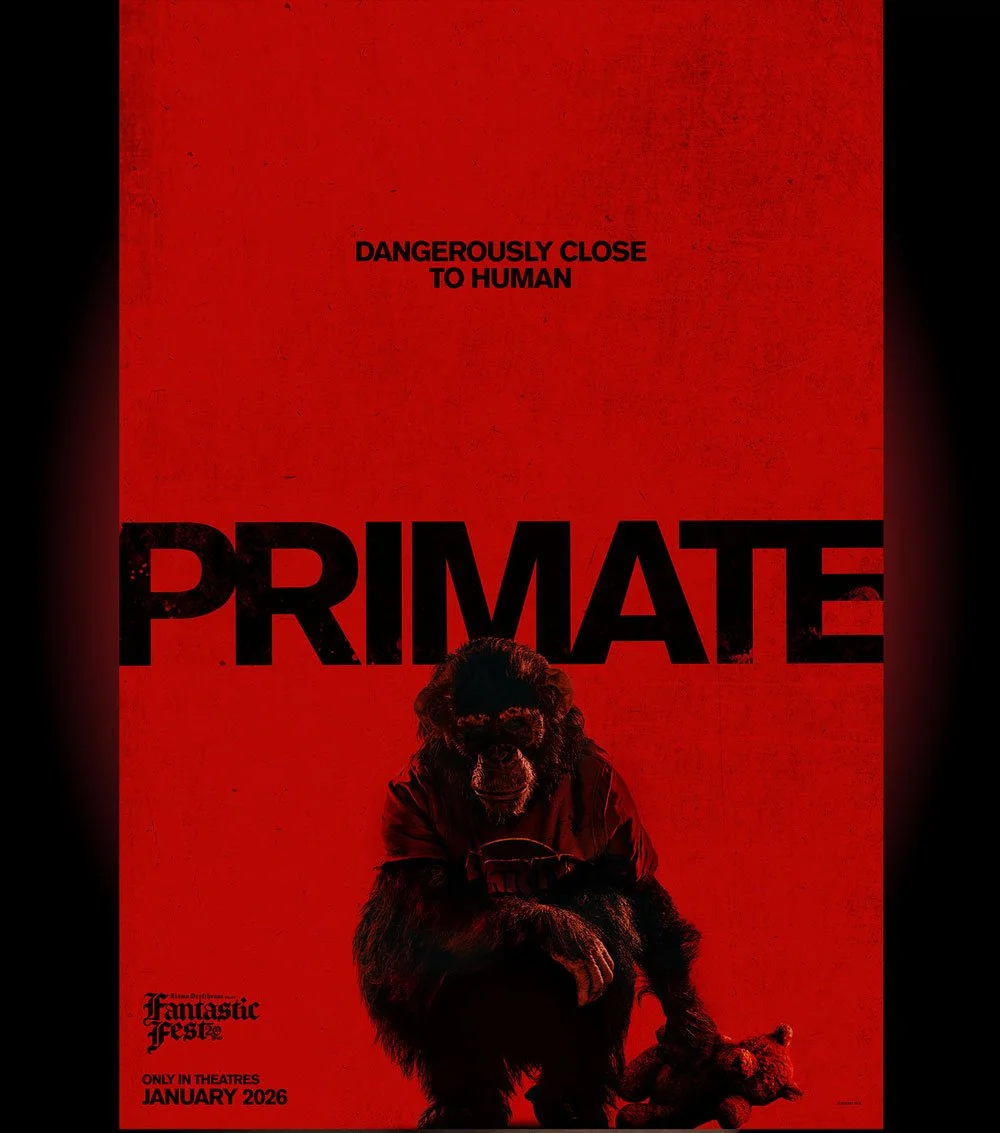
Primate (2026)

Someone watched the opening to NOPE and decided that should be a full feature. For as terrifying as chimpanzees can be, and the number of real life incidents involving supposedly domesticated chimps, there’s a surprising lack of simian horror.  This film reskins Cujo with a chimpanzee, then lampshades how unlikely and outlandish the sequence of events might be… But commits fully to it anyway. 

Rather than a CGI chimpanzee, the filmmakers went with a human in an ape suit. A CG chimp à la NOPE would likely be far more convincing visually, but the practical approach allows for visceral encounters and grisly moments that carry genuine weight and physicality. Despite this, the suit is also the film’s weakest link. You can almost see the zipper, and certain moments break immersion entirely when it’s obvious you’re watching a person pretending to be an ape. They should have hired Andy Serkis. 

The characters are stock and rote, but they don’t need to be much beyond surface level archetypes and inevitable chimp fodder. They even introduce a few so absurdly obnoxious and unlikable, they might as well have had ‘Victim’ written backwards on their foreheads. The film basically plays as a simian slasher film, with many of the tropes intact including victims condemned by their own idiocy. The film is self-aware enough to play into a sense of camp, and the murderous chimp gets a number of hilarious moments during its rampage. The kills are grisly, reveling in the practical effects, and should satisfy even the discerning gore-hound. 

It is dumb, it is gory, yet it works. Whether that is compliment or confession is to the viewer’s discretion. Regardless, if you have to see one killer chimpanzee movie this year, Primate delivers. 

C-

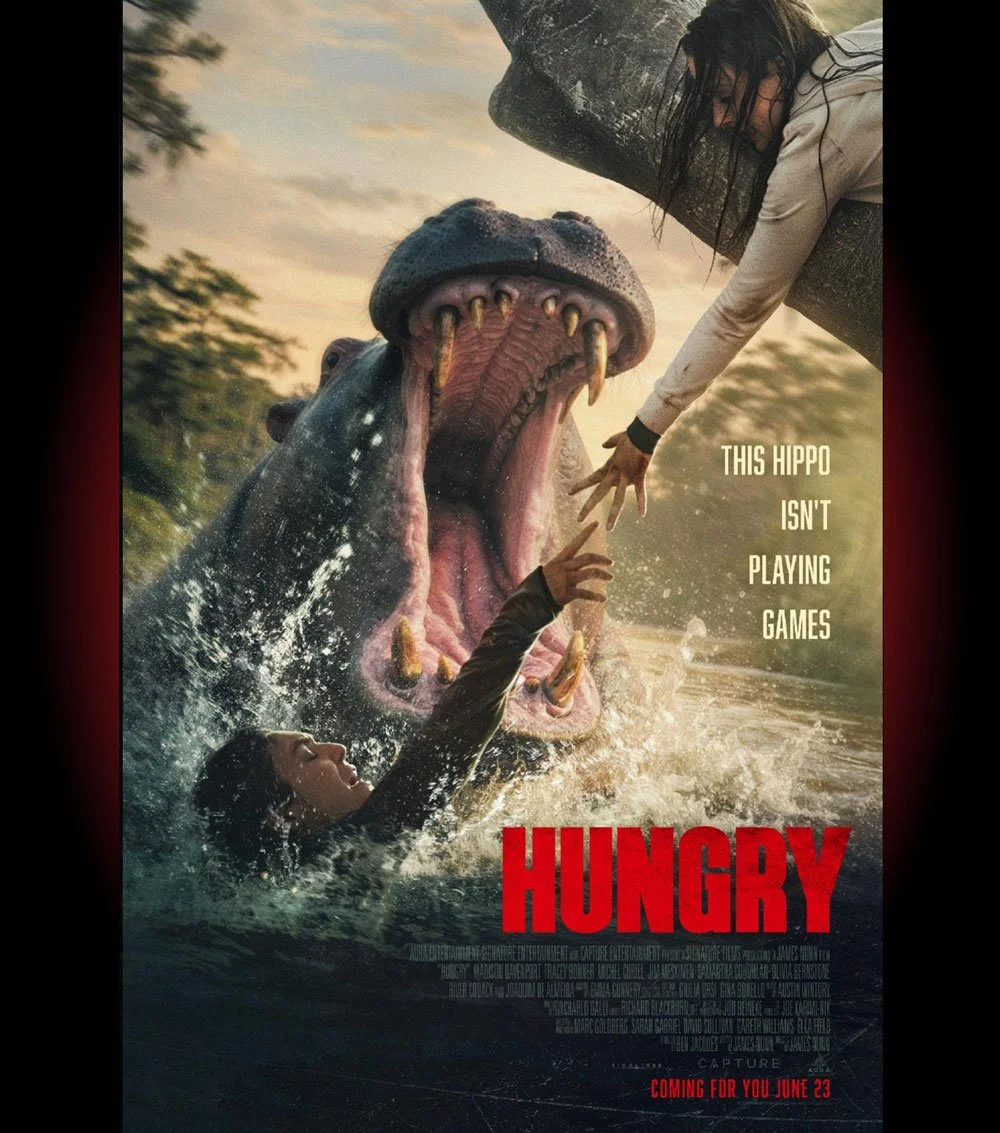
Hungry (2026)

‘Hungry Hungry Hippos’ as a horror film. It was just a matter of time. Hippos are the deadliest large land animal on the planet, and own the waters too. In countries where they are prevalent, attempting co-existence is already a horror movie. So, here it is, in all its glory, although let's be honest: the title is a lie. Hippos don’t kill out of hunger. They are herbivores. They kill out of hate. 

The movie plays it straight with the premise. This is pretty much any ‘shark’ movie out there, with a search and replace function. There’s little here that hasn’t been seen before. Whether out of budget constraints or practicality, they understandably keep the hippo hidden for much of the runtime, with the kills a blur of thrashing water and briefly glimpsed tusks. 

The kills themselves are tame and sanitized. There is plenty of blood pooling in the waters, but little else. The story is generic, but manages to introduce a little obscure American history that might cause someone to click open a Wikipedia tab. The characters are largely sympathetic, but barely sketched, with some characters almost a parody of existing survivor movie tropes. The grizzled hippo hunter has some absolutely hilarious lines delivered with such sincerity, it is almost worth the price of admission. Almost. 

Hippos deserved better. A higher body count. More menace. More visibility. Instead, the hippo is handed a relatable motivation and even a conscience toward the survivors, when its nature is simply to finish the murder spree. Because they hate us. Maybe deservedly, if this is the best hippo horror movie we can offer. 

D+