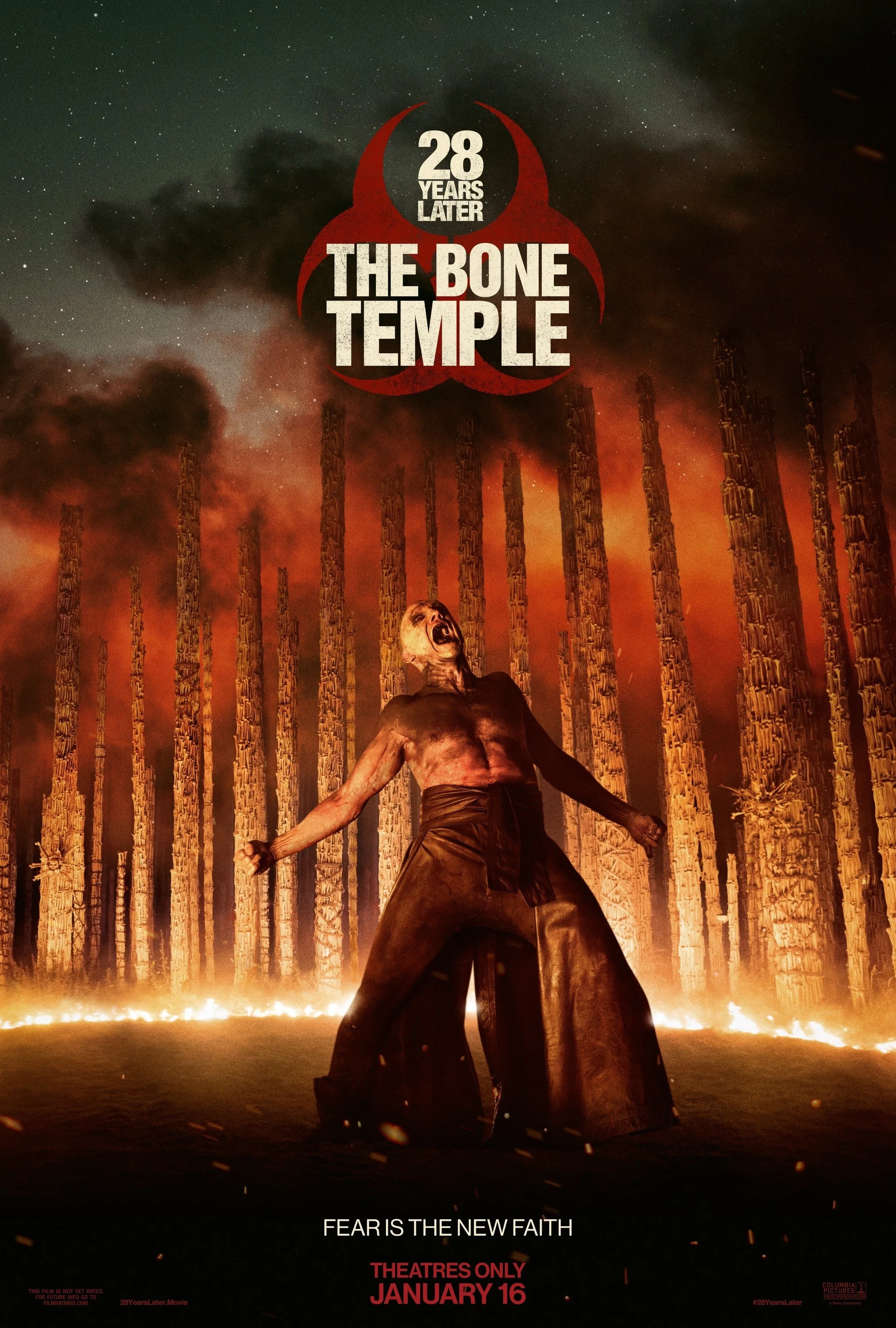
28 Years Later resurrected this franchise after nearly two decades of dormancy, but alienated audiences in the process. Rather than a return to the fury of the rage-infected, viewers were delivered a philosophical contemplation on the nature of death and community. It was meditative and mournful, where audiences expected terror, and the rage-infected themselves seemed relegated to the periphery. The ending was so jarring and tonally disjointed, it doubtless drove audiences from this follow-up, which is a shame as this is the superior film and pays off some of its predecessor’s most outlandish choices.
Nia DaCosta takes over from Danny Boyle and comes out swinging. Her filmmaking is ferocious, delivering some of the nastiest moments in a franchise known for the grotesque. She rectifies complaints about the lack of horror in the first while still exploring the philosophical notions, and adds a surprising amount of humor. The infected are still largely scenery, but the greater horrors are driven by a different ideology.
There are two temples in this film: one, a field of sky-reaching towers of skulls patiently erected by Fiennes’ Dr. Kelson, and the other a violent cult of devotion to a false idol and self-anointed prophet. Each represents an extreme: a track-suited congregation of feral children reciting a gospel of violence, and a humble doctor who reveres the dead in service to the living.
Ralph Fiennes delivers an extraordinary performance, even by the standard of his exceptional career. He is gentle and absurd, philosophical and profound. Jack O’Connell meets him at full intensity as a villain desperately needing to validate his personal theology. He preaches a sermon of violence as virtue and atrocity as sacrament, proclaiming himself the devil’s heir to a dead world. The conflict between their churches is what propels this movie into one of the greatest set pieces of the year.
The Jimmy Savile metaphor is what has divided audiences of these films. It is simultaneously a brilliant literary device, giving Brits a signature figure to epitomize human evil, and a baffling, brightly colored enigma to wider audiences. Fortunately, the intricacies of his case don’t matter here. Anyone who has watched a crowd adore a charismatic monster understands the mechanism. In a post-apocalyptic setting, with only fragments of the old world left to worship, it isn’t strange that children would pick the wrong idol. It’s inevitable.
It isn’t perfect: the tonal swings are jarring, there’s a lack of infected, and the dread is replaced with spectacle. The supposed main character of this series is reduced to a side-player, and seemingly lacks the autonomy that carried him into this sequel in the first place. This is also a film that cannot stand without the first, yet finding the connective tissue between major elements requires a bit of work.
This film was punished for the sins of its predecessor, though it delivered exactly what was promised. A contemplation of faith and fanaticism, a demonstration of compassion over cruelty. The question simmering beneath it all is whether, past the rage and the atrocity, anyone is truly lost.
And the film answers with a quiet non-answer: faith can spawn from anything. Even bones.